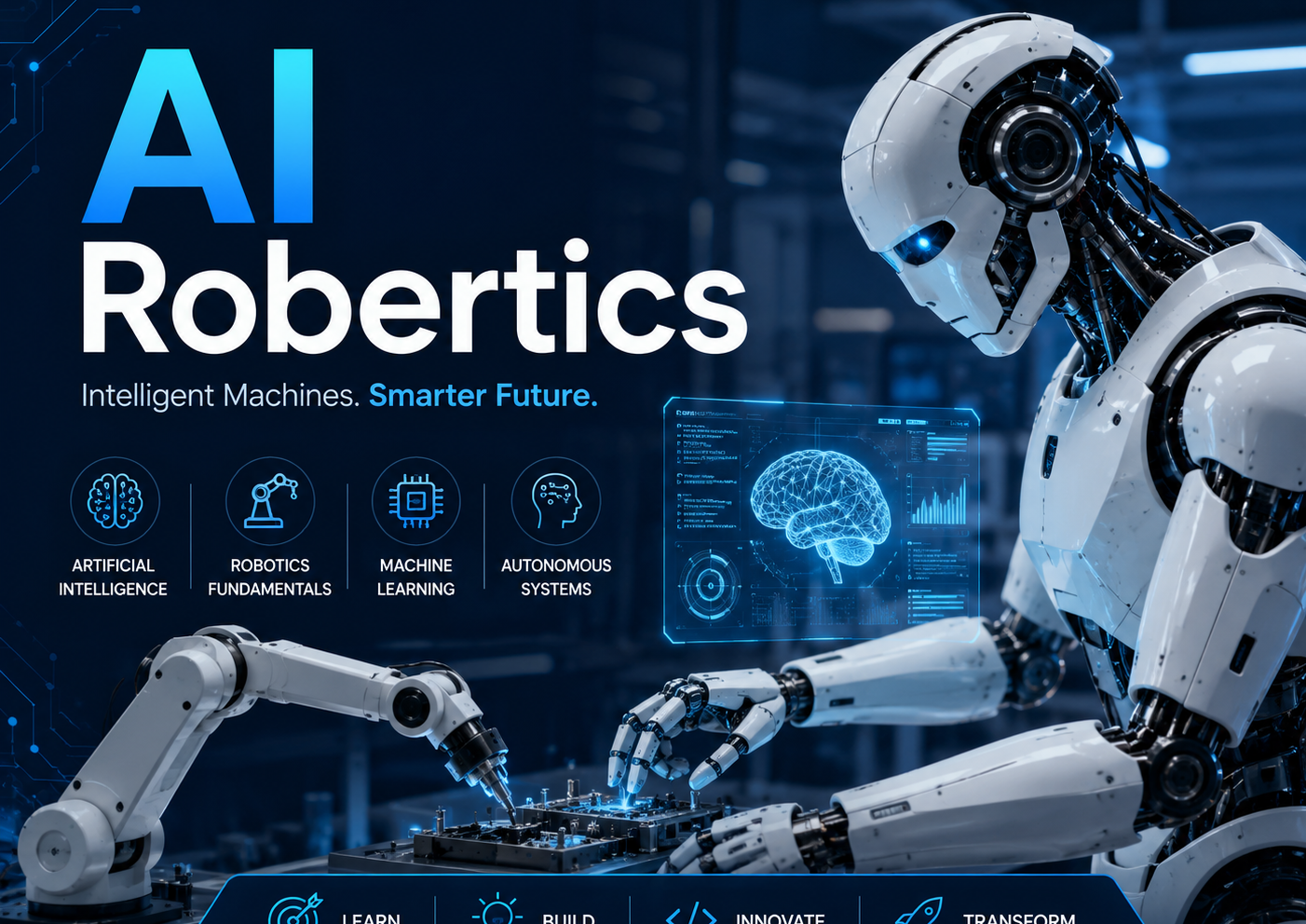
AI Robertics ( Part 2/Semester 2)

Intelligent Robotics • Computer Vision • Speech AI • Agentic AI Systems
🧠 Course Introduction
Modern robotics is no longer just about building machines—it is about creating intelligent systems that can perceive, decide, and act autonomously.
This course builds the programming and AI foundation behind modern robotics systems.
Students gain the technical skills needed to contribute confidently to competitive robotics teams and advanced robotics projects.
For convenience and flexibility, the program is offered in two semesters. The curriculum below represents the complete syllabus, with Robotics Foundations & Control Systems in Part 1, followed by Advanced AI Robotics & Intelligent Systems in Part 2.
This is part 2/semester 2.
Complete Curriculum
:
-
Python programming for robotics and automation
-
Robot control logic and autonomous behavior design
-
Sensor integration (distance, motion, line tracking)
-
Computer vision (object detection and tracking)
-
AI-driven decision-making systems
-
Real-time robot control and feedback loops
Students apply these concepts through hands-on projects using robotics platforms and simulation environments, building systems that can respond intelligently to their environment in real time.
This course develops the same foundational skills used in modern robotics, autonomous vehicles, and intelligent systems.
🚀 How Students Benefit in Robotics Competitions
Students who complete this course gain a strong advantage when participating in robotics competitions such as:
-
FIRST LEGO League
-
VEX Robotics Competition
-
FIRST Tech Challenge
-
FIRST Robotics Competition
Because these competitions require students to design robots that not only move and complete tasks, but also:
-
Make autonomous decisions during matches
-
Use sensors to react to real-time conditions
-
Implement reliable programming logic under constraints
-
Solve complex scoring challenges efficiently
-
Debug and improve robot behavior systematically
🧠 What Students Gain
After this course, students are able to:
💻 Strong Programming Foundation
Write structured Python programs for real robotic systems, not just basic coding exercises.
🤖 Autonomous Robotics Skills
Design logic for robots that can operate independently without manual control.
👁 Computer Vision Capability
Understand how robots “see” and interpret their environment using cameras and AI models.
⚙️ Systems Thinking
Break down complex robotic challenges into logical, solvable components.
🏆 Competition Readiness
Contribute meaningfully to robotics teams, especially in programming, autonomous mode, and technical problem-solving roles.
Want to submit a review? Login